
When thinking about a school principal, the image people typically get—reinforced by Hollywood stereotypes—is that of a disciplinarian. Being sent to the principal’s office typically stands for some serious trouble.
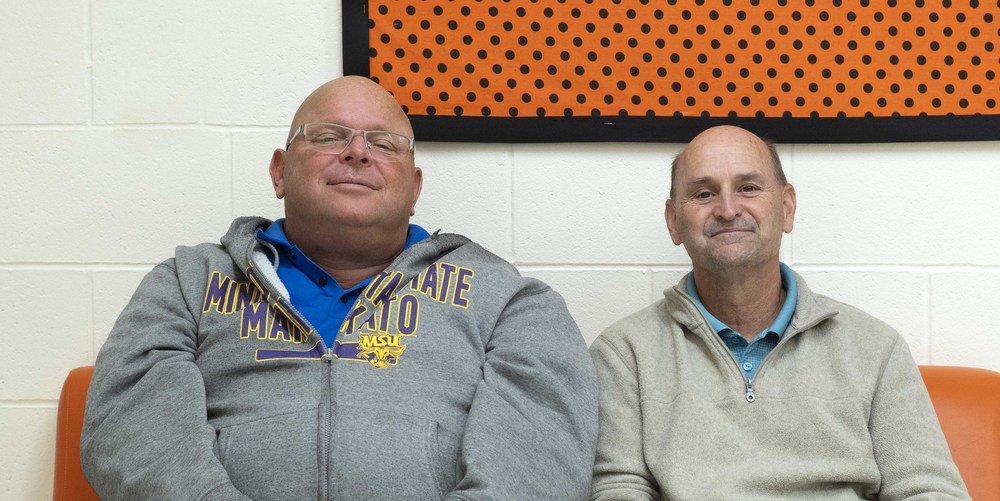
For Cleveland School principals, Scott Lusk and Dave Cink, improving student behavior is an important part of what they do–although just a small part–but what’s more important is how they do it.
“We have a shared philosophy that discipline is not just designed to punish a behavior, it’s also, and perhaps mainly, intended to help students understand the damage their actions may have done,” Cink said, “not only physical damage but emotional damage to others. So, much of our efforts are intended to help the student figure out if there is a way to rebuild those damaged relationships and come up with ideas on how to better handle a similar situation they may confront in their future.”
October is National Principals Month, an annual observance to recognize the essential role school principals play in student success and a school's overall climate, so it is an apt time to get to know Mr. Lusk and Mr. Cink and learn about the rest of their many responsibilities at Cleveland School.
Scott Lusk
As a one-on-one paraprofessional at St. Peter School’s, Lusk’s entry into the educational system was a humble one. From there, the Le Center native went on to teach 5th and 6th grade at St. Peter and Le Center Schools. He also worked summer school at Buckeye Group Home in Faribault for Faribault Public Schools. Before becoming principal at Cleveland, he served as a University Supervisor for Minnesota State University, Mankato and as a District Mentor in St. Peter.
“I became a principal to help build a school where students and staff feel seen, supported, and celebrated,” he said. “My journey has taught me that effective leadership is less about having all the answers and more about collaborating and working together to continuously improve our learning community.”
Lusk said that Cleveland Public School, educating students from preschool through 12th grade, is a unique setting, and that has made being principal rewarding.
“Every year, I have the pleasure of interacting with preschool students all the way up to seniors in high school. Witnessing the immense growth of students from their early years to their graduation day and knowing I've been part of helping them become better humans and integral members of society, fills me with pride.”
Besides observing students gain confidence, develop a strong work ethic, set and achieve their goals and ultimately become “good humans,” Lusk enjoys watching teachers excel as well.
“Seeing teachers interact with students and successfully implementing new strategies that allow them to continue growing to meet diverse student needs…Those moments reinforce the importance of educators' work.”
A principal makes a large contribution to school culture, and Lusk said that for him, that culture begins with connection.
“I make it a point to be approachable and authentic. A little laughter and clear communication go a long way in strengthening relationships. I focus on empowering our staff and actively try to remove barriers so they can concentrate on what they do best and that is engaging with students.”
When not at school, Lusk enjoys spending time with my family, friends, traveling, going for walks, listening to music and watching sports.
Dave Cink
Still teaching College in the School (CITS) courses today, Cink has been an educator for 30 years, and was a teacher at Le Center before coming to Cleveland. He became a principal because he wanted to make an impact on education in other ways besides directly in the classroom.
A CHS graduate, Cink strives to be respectful in every interaction he has with everyone, but when it comes to students, he skews ‘old school.’
“My personal philosophy is that having high expectations and holding kids to those is important for their development. Most people today think I'm too tough on the kids, some might even say ‘mean.’ However, I firmly believe that level of discipline is good for kids. They may not like it in the moment, but it is good for their long-term development.”
Like Lusk, Cink also enjoys seeing students develop over the years.
“When we are able to see a student mature and grow, see them reach a level of responsibility, then I know we have accomplished one of our main goals, and that always makes me smile.”
When it comes to teachers, Cink’s goal is to not micromanage.
“We have great teachers. I just try to stay out of their way and let them do their thing.”
Cink’s master’s degree and a university certification allow him to teach CITS, two classes a day.
CITS is a win-win-win for the students, parents and school because the students are still registered at CHS, but their student transcript shows the course just as if the student had paid for and taken it on a college campus. Cink teaches History, Economics and Political Science. About 48 CHS students take advantage of CITS.
When not at school, Cink enjoys spending time with his family.
Principal duties
Although best known for having to enforce discipline, a principal’s duties are many. For Lusk and Cink, that means the following:
Student support: “Maybe our most important role is to foster learning in many ways besides just correcting negative behaviors,” Cink said. “We actively encourage teachers to send home positive emails reminding students and parents of the positive things those students are doing. Yes, we need to call people out when they go astray, but a big part of that student support is promoting those healthy lifelong habits. It sounds really cliche, but our goal is to support students to grow into great human beings, not just a bundle of great knowledge. We are constantly looking for ways to help students build that ever important belief in themselves, while also raising the bar along the way.”
Staff support: “One of the best features of Cleveland Public Schools is the quality of our staff,” Cink said. “We really do have an exceptional number of invested and caring individuals working with our kids. One key job as a principal is to foster that by supporting staff. This can be done in many ways. One obvious example would be to keep classroom disruptions to a minimum. However, additional things include making sure staff has the resources necessary to excel at their jobs. To provide them with time to explore and research newer and perhaps better ways to instruct those students. Mr. Lusk is highly trained in the evaluation of teachers. This includes the ability to use proven techniques to help teachers become better at their craft. He regularly observes classes and follows those visits with great discussions that help make teachers better. I have learned a great deal from Mr. Lusk and try to apply those lessons to the teachers in a similar way to Mr. Lusk. I am not as polished, but I do try to help teachers self-reflect and grow.”
Professional growth & development: “Administration has scheduled time for professional growth and development for staff on a regular basis,” Cink said. “Experts in areas ranging from how to implement IEP and 504 plans to effective use of AI in the classroom are brought in to help staff grow in their skills. We regularly allow work time for PLC groups (professional learning communities) where teachers meet and discuss / problem solve issues that arise. Supporting the ability of the teachers to become better in their profession is a definite priority.”
Communication & community interaction: “Working with members of the community through a variety of communication methods to hear and understand ideas community members might have to help our school grow stronger and better. Our greatest resource is our community and having a strong partnership with that community is essential for the continued success of our school.”
Specifically, said superintendent Dustin Bosshart, Lusk and Cink do the following:
Assist paraprofessionals with supervision and cleaning tables after student breakfast and lunch
Handle specific behavior issues, which often means getting the student away from the class setting
Have email and phone communication with parents about behaviors and consequences
Make general interactions with teachers and students to build a positive climate at school
Handle 504 plans and assist with special education when needed and attend 504 meetings and IEP meetings as district representatives
Help the activities director with things like grade lists and student eligibility
Prepare the many reports required by state and federal agencies
Meet with staff, including regular monthly staff meetings for both high school and elementary teachers
Proactively meet with large groups of students regarding issues
Coordinate with office staff on things like attendance and unexcused absences
Adjust and write new procedures for the student handbook
Attend school board meetings and provide input on day-to-day activities at the school
Attend seminars and professional development to help enhance their skills and knowledge.
Create a curriculum review cycle and then help staff write curriculum with the required embedded standards from the state.
Determine items for purchase, such as furniture, resources, supplies, and teacher requests, and how all of that impacts the overall budget.
Help create crisis plans for the district.
Vet potential candidates for open positions and then make recommendations for the board to hire
Evaluate staff each year, giving critical feedback to them to help them improve themselves
Act as a counselor when the need arises to help a student or staff member get through a traumatic event that may have occurred recently or in the past; Provide the individual with resources to help them cope with the situation.
“This is just a few of the items that our principals undertake on any given day of the week, plus many more,” Bosshart said.
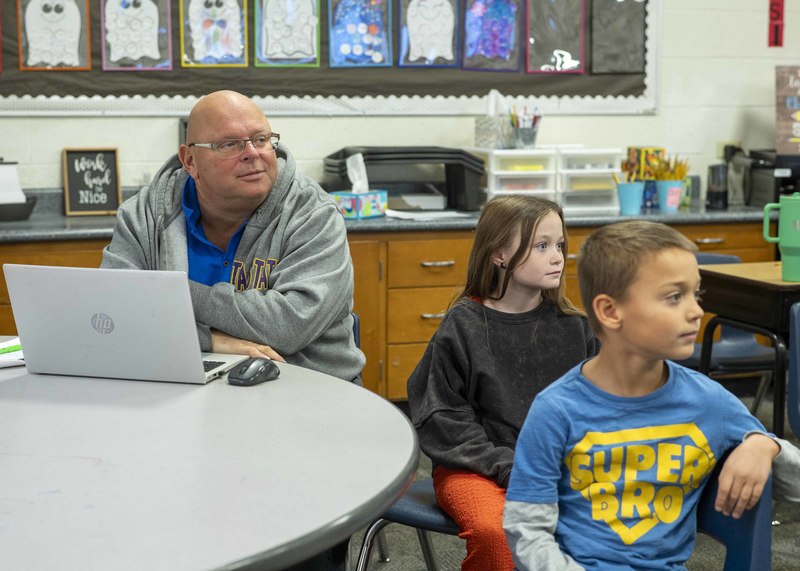 Scott Lusk spends time in each classroom periodically. Here, he observes one of the second-grade classes.
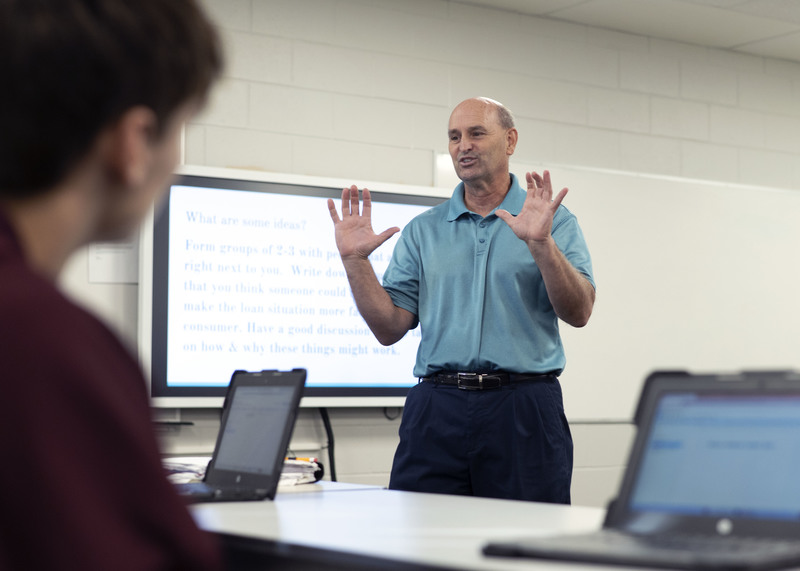 Dave Cink in the CITS Advanced Economics class. The students were learning about different strategies in managing home mortgages.