
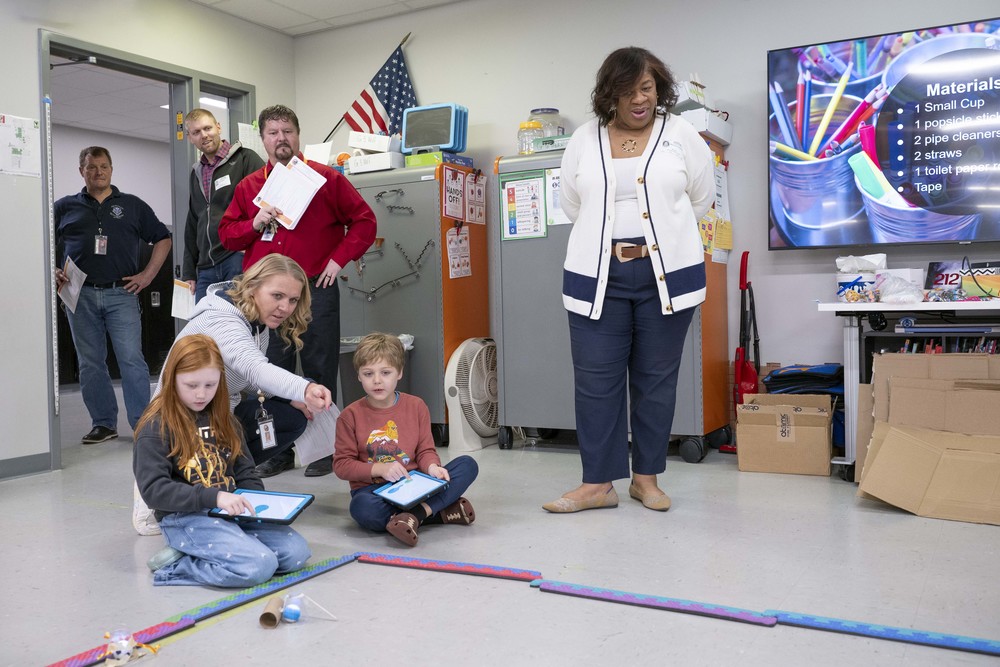
Representing the Minnesota Department of Education (MDE), Dr. Macarre Traynham, assistant commissioner of the Office of Equity and Engagement, visited Cleveland School on April 8.
The visit was an opportunity for Traynham to witness, firsthand, an outstate K-12 school in operation and to hear staff and administration's concerns about the cost of state mandates and about how state funding is distributed.
Traynham was impressed with the school.
“From the moment I entered the building, I felt welcomed,” she said. “Students were engaged and eagerly answered questions and shared with me the important and fun work they were participating in. I appreciated talking with staff and school board members about the resources they need to help better serve their community. It was clear that the adults are committed to ensuring students thrive. It’s also clear that students are actively taking advantage of the many opportunities Cleveland Public Schools make available to them.”
Schools of all sizes are important to Minnesota's educational system, Traynham said.
“Differentiation is terminology we use and embrace in education because we know that everyone learns and engages in different ways. One-size-fits-all doesn’t work for people. Small, “outstate” schools offer perspectives and experiences that are important for building a system that is truly responsive to the needs of our diverse and wonderful student population.”
The visit began with a tour of the building with stops in elementary classrooms, one of the pre-school rooms, the band room, the choir room, the STEM room, the art room, the shop, the FACS room and the new gym and commons. Afterwards, she met with staff, administrators, school board members and students.
The group discussed funding concerns, including a grant for rural schools that is no longer available to Cleveland because student enrollment is too high, funding disparities compared to nearby schools due to free and reduced lunch numbers, cuts in transportation funding, losing funds because of students taking Post Secondary Enrollment Options (PSEO) classes instead of College in the Schools (CIS) classes, cost requirements of implementing the READ Act, funding inequity with open-enrolled students and cuts to special education.
Having the funds required to maintain student support and mental health services and ensuring equitable broadband and technology access were also concerns.
“It adds up,” superintendent Dustin Bosshart said. “All of that falls on the local residents. We’re trying to be good stewards with the operating levy, but we’re seeing that money being eaten up.”
Besides the visit, administration and board members wanted to make sure they continue to have a seat at the decision table.
“We’d love to say our piece to the people who are making those decisions or at least provide information to the people who are making those decisions,” said board member Ryan Ponwith.
Besides making trips to schools around the state, the MDE partners with associations like principals’ associations, superintendent’s associations and school board association to better understand issues schools face and make recommendations, Traynham said.
“Part of what we do as a department is to create possible legislation. We create policy and bills we are trying to push forward. We make recommendations. The governor will ultimately make a choice on what to include in his package that he sends to the legislature, and the legislature is negotiating around what they are going to say yes to or not.”
The purpose of the MDE school visits is to give schools a voice while gathering feedback and learning more about the great work Minnesota schools are doing, schools’ concerns and needs. Schools structure the time as they please, although most of our visits thus far have consisted of meeting with school administration, students, educators and school staff and community members.
“Schools are the epicenter of our communities,” Traynham said. “As educational leaders, our most important role is serving our students, educators, and families. School visits provide that necessary connection with young people to hear directly from them about their lived experiences and how our decisions affect their learning. Our students are at the center of everything we do, and it is our charge to ensure every child receives a quality education. It’s also another way for school communities to share with us their feedback and ideas.”
Above: Dr. Macarre Traynham watches first and second-grade students operate remote-controlled cars they built in STEM class.
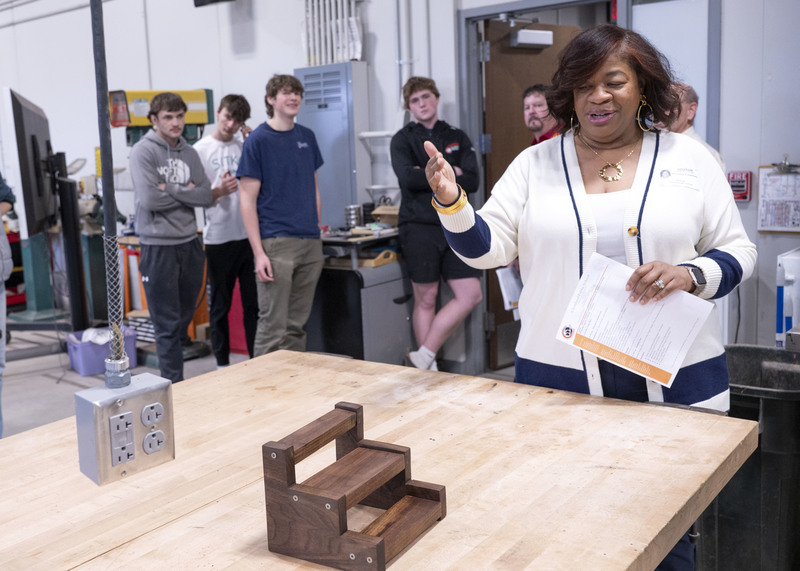 Dr. Traynham looks at a project during her visit to the shop.
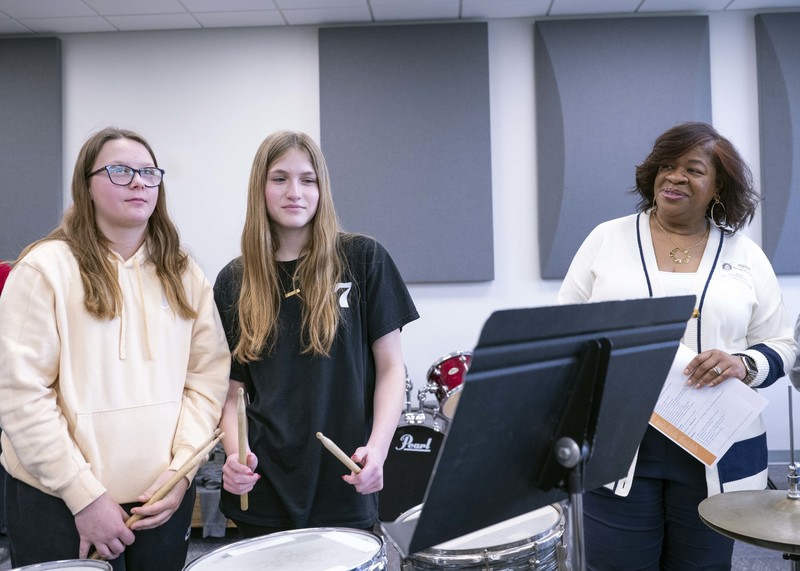 The junior high band was rehearsing when Dr. Traynham visited the band room.
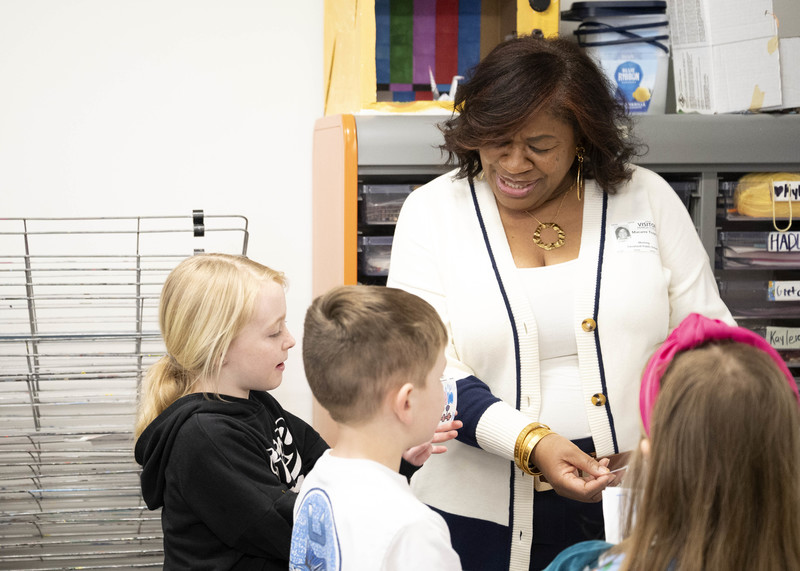 First-grade students show Dr. Macarre Traynham their art class projects.
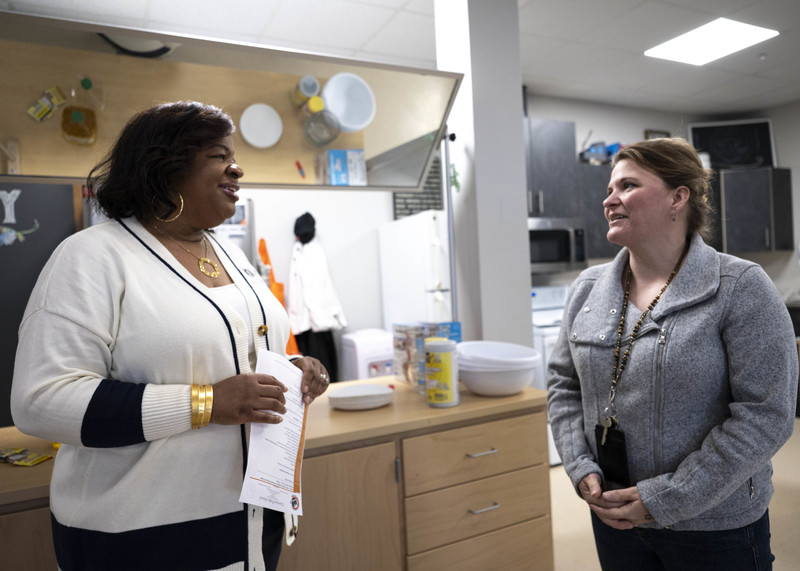 FACS teacher Amanda Whiteis visits with Dr. Macarre Traynham about the scope of FACS at CHS.
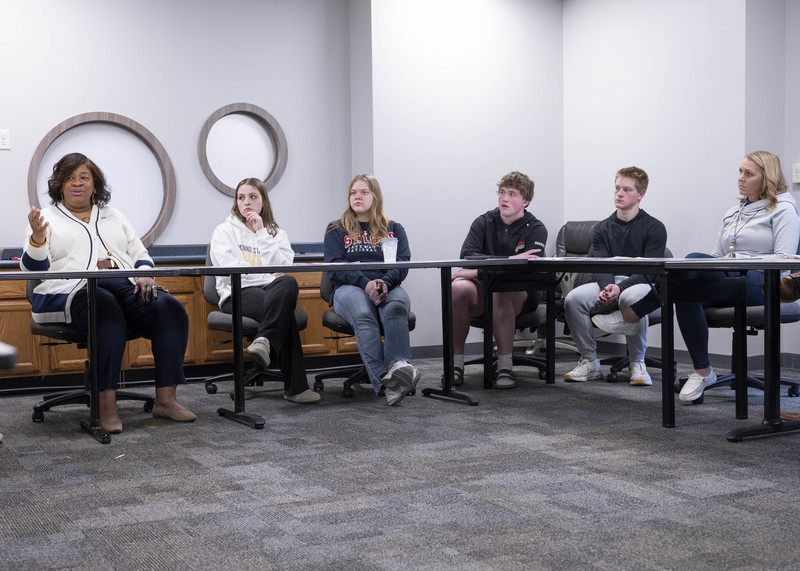 Students Kaitlyn Flowers, Melissa Miller, David Draheim and Caleb Connor were on hand to provide their opinion about Post Secondary Enrollment Option (PSEO) and College in the School (CIS) and the reasons for choosing one of the college-course programs over the other. The school offers over 30 credits of CIS courses, yet some students choose PSEO, an option where they take courses on a college campus, even though a similar course is sometimes offered at CHS. The option to choose PSEO is mandated by the state, yet schools lose state funding when a student enrolls in PSEO.